Different Types of Staircases & How an Architect Designs Them the Right Way
In architectural design, a staircase is far more than a means of moving between floors. It functions as the structural backbone of a building, a critical circulation element, and often a defining feature of the interior and exterior design. Whether designed for residential homes, villas, duplex houses, apartments, commercial buildings, offices, hospitals, hotels, or institutional projects, staircase design has a direct impact on construction cost, space efficiency, safety, comfort, and visual appeal.
When staircase planning is ignored or handled casually, it results in wasted floor area, awkward movement, poor safety, increased structural cost, and long-term functional limitations. Improper riser–tread proportions, inefficient placement, or lack of coordination with structure and interiors can significantly increase construction and renovation expenses. This is precisely why engaging a professional architect near you is essential. An experienced architect ensures that the staircase is code-compliant, structurally efficient, space-optimised, safe to use, and seamlessly integrated with the overall architecture and interior design.
In this blog, we explore the different types of staircases, explain where each type works best, and demonstrate how ArchitectsHive designs staircases intelligently balancing architecture, construction practicality, interior aesthetics, and long-term usability to deliver maximum value for every project.
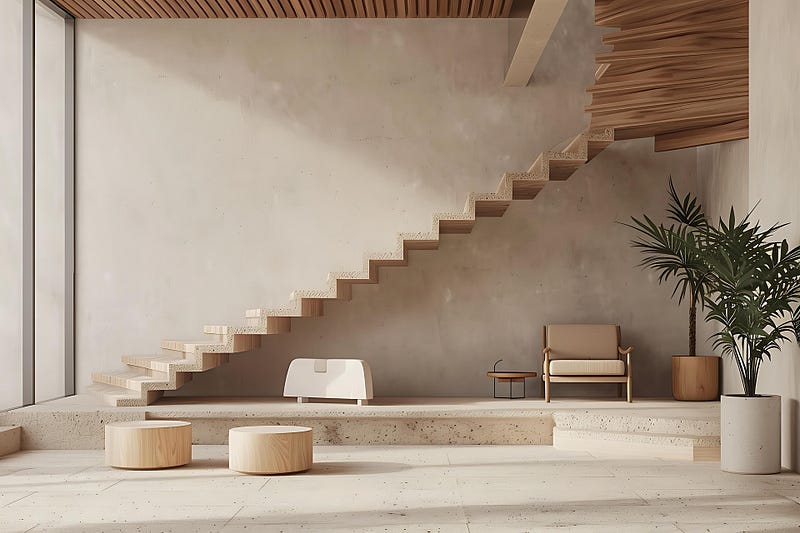
Why Staircase Design Needs Architectural Expertise
A staircase impacts far more than vertical movement within a building. Whether it is a straight staircase, L-shaped staircase, U-shaped (dog-legged) staircase, spiral staircase, curved staircase, floating staircase, or cantilever staircase, the design directly influences:
A staircase impacts:
• Structural planning — column grids, beam placement, load transfer, and RCC optimisation
• Circulation and movement — walking comfort, safety, and user experience
• Floor-to-floor connectivity — efficient vertical movement between levels
• Interior design flow — spatial continuity, visual openness, and layout harmony
• Natural light and ventilation — daylight penetration and airflow through stairwells
• Construction and RCC cost — steel consumption, shuttering complexity, and execution efficiency
A professional architect evaluates critical staircase design parameters such as riser–tread ratios, headroom clearance, landing positions, staircase type selection, structural loads, fire safety norms, and building codes — aspects that cannot be solved at the construction stage alone.
At ArchitectsHive, staircase design is integrated early in the architectural planning phase, not treated as an afterthought. This ensures cost-efficient construction, safety compliance, smooth circulation, and seamless integration with architecture and interior design, delivering staircases that perform efficiently and add long-term value to residential, commercial, and institutional projects.
1. Straight Staircase
A straight staircase follows a single, linear path without any change in direction. It is one of the most widely used staircase designs in residential architecture, commonly seen in independent houses, duplex homes, builder floors, villas, apartments, and commercial buildings. Due to its straightforward layout, this staircase type is highly preferred where space planning, ease of construction, and budget control are important priorities.
Architectural Advantages
From an architectural and construction perspective, straight staircases offer several practical benefits:
- Simple structural system with clear load transfer
- Easy and faster execution on site
- Cost-effective RCC staircase design, reducing steel and shuttering complexity
- Smooth, comfortable circulation, ideal for daily use
- Easy integration with interior design and spatial planning
Because of its simplicity, a straight staircase is often the most economical and structurally efficient option in both small residential plots and large commercial buildings.
ArchitectsHive Approach
At ArchitectsHive, we treat straight staircases as more than just circulation elements. Our staircase design approach focuses on comfort, efficiency, and architectural integration:
- We carefully optimise tread and riser proportions as per building by-laws to ensure effortless and safe movement
- The staircase is aligned with structural walls or beams to minimise RCC consumption and overall construction cost
- Natural light is strategically introduced through windows or skylights to enhance safety and user comfort
- Handrails, finishes, lighting, and under-stair storage solutions are designed as part of the interior design concept, not as afterthoughts
This ensures that the straight staircase becomes a space-efficient, structurally sound, and visually clean architectural element — perfectly suited for modern homes and commercial projects alike.
2. L-Shaped Staircase (Quarter-Turn Staircase)
An L-shaped staircase changes direction by 90 degrees through an intermediate landing, making it one of the most practical and widely used staircase types in urban residences, villas, duplex houses, apartments, and small commercial buildings. This configuration is especially popular in modern residential architecture where space optimisation, privacy, and circulation planning are key design considerations.
By breaking a long vertical movement into two shorter flights, the L-shaped staircase offers better control over spatial flow while fitting comfortably into compact floor plans.
Architectural Advantages
From both architectural and construction perspectives, an L-shaped staircase provides multiple benefits:
- Better space utilisation compared to straight staircases in tight layouts
- Enhanced safety, as the landing reduces fall impact and fatigue
- Improved visual and acoustic privacy between floors
- Greater flexibility in interior design and zoning
- Efficient circulation without dominating the floor area
This staircase type is ideal where a balance between functionality, comfort, and architectural elegance is required.
The ArchitectsHive Difference
At ArchitectsHive, L-shaped staircases are carefully engineered to add value, not just movement:
- We strategically position landings to eliminate dead or unusable spaces
- Staircases are aligned with column grids and structural walls, improving structural efficiency and reducing RCC cost
- The layout is used intelligently to separate public and private zones, especially in residential and duplex homes
- We integrate designer railings, facade lighting, and ambient stair lighting to enhance premium interior aesthetics
The result is a staircase that improves circulation planning, reduces construction complexity, and elevates the overall architectural and interior design quality — all while keeping long-term cost efficiency in focus.
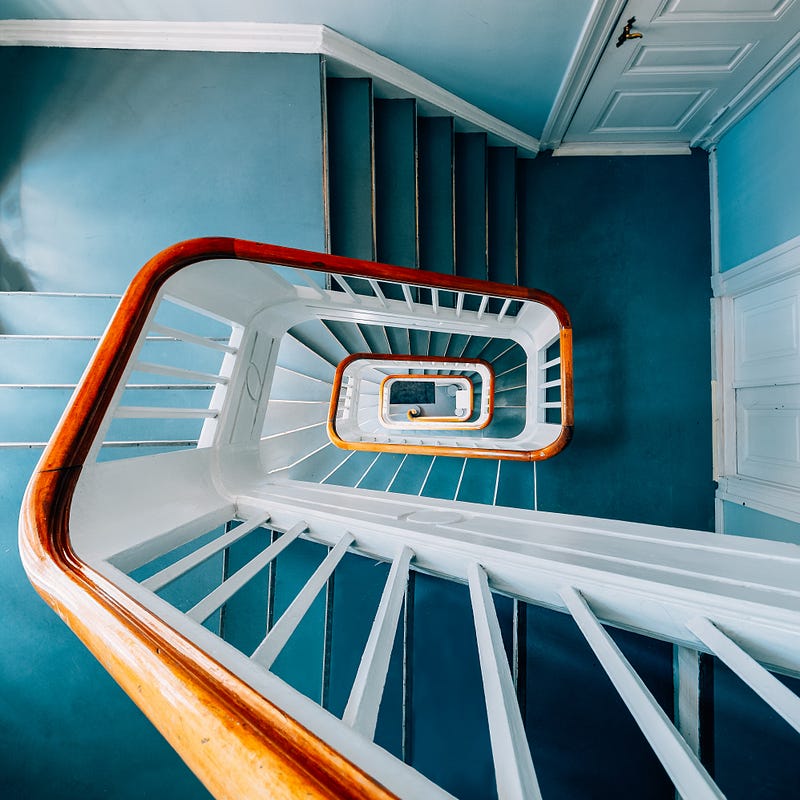
3. U-Shaped Staircase (Half-Turn Staircase)
A U-shaped staircase, also known as a dog-legged staircase, consists of two parallel flights connected by an intermediate landing that reverses the direction of movement. This staircase type is widely preferred in large residential homes, villas, commercial buildings, hospitals, hotels, institutional buildings, and multi-storey developments due to its compact layout and high safety standards.
In modern architectural design and construction planning, U-shaped staircases are valued for their ability to handle heavy foot traffic while maintaining comfort, accessibility, and compliance with building regulations.
Architectural Advantages
From an architectural and user-experience perspective, U-shaped staircases offer several advantages:
- Compact footprint with efficient use of vertical space
- Comfortable and fatigue-free movement due to shorter flight lengths
- Higher safety levels, especially in public and healthcare buildings
- Excellent suitability for high-occupancy and multi-user environments
- Easy integration with fire exits and emergency circulation routes
These features make U-shaped staircases ideal for projects where functionality, safety, and long-term usability are critical.
How ArchitectsHive Designs It Better
At ArchitectsHive, U-shaped staircases are designed with precision, regulation awareness, and construction efficiency:
- We ensure correct landing widths, tread-riser ratios, and headroom as per National Building Code (NBC) and local byelaws
- Stair flights are proportioned for structural balance and symmetry, reducing RCC and shuttering complications
- In commercial, hospital, and hotel projects, we design fire-safe and code-compliant staircases for emergency evacuation
- Staircases are strategically integrated with lift lobbies, corridors, and circulation cores to improve movement efficiency
This approach ensures the staircase is construction-friendly, regulation-compliant, future-ready, and seamlessly aligned with the overall architecture, interior design, and building services planning.
4. Spiral Staircase
A spiral staircase is a compact vertical circulation system that revolves around a central column, making it ideal for small residential plots, duplex homes, lofts, terraces, offices, cafes, and luxury interior spaces. In modern architectural and interior design, spiral staircases are often used where floor area is limited or where the staircase itself is intended to become a visual focal point.
While visually striking, spiral staircases demand careful architectural and structural planning to ensure safety, comfort, and durability.
Architectural Considerations
From a professional architecture and construction perspective, spiral staircases offer specific advantages and limitations:
- Highly space-efficient, occupying minimal floor area
- Best suited as secondary staircases, terrace access, or internal connectors
- Requires precise structural calculations for the central column and cantilevered treads
- Movement comfort and safety depend heavily on tread depth, rise, and handrail design
Because of these factors, spiral staircases must be designed with caution, especially in residential and commercial buildings.
ArchitectsHive Advantage
At ArchitectsHive, spiral staircases are designed as a balance of engineering accuracy and interior aesthetics:
- We perform detailed load calculations and fixing detailing to ensure long-term structural stability
- Tread depth, riser height, and handrail dimensions are carefully proportioned for safe movement
- Spiral staircases are treated as accent elements in luxury interior design, enhancing visual appeal
- We avoid using spiral staircases as primary staircases in homes and public buildings where safety or accessibility may be compromised
Our approach ensures that every spiral staircase delivers maximum visual impact, optimal space utilisation, and uncompromised safety, making it a smart architectural feature rather than a risky design choice.
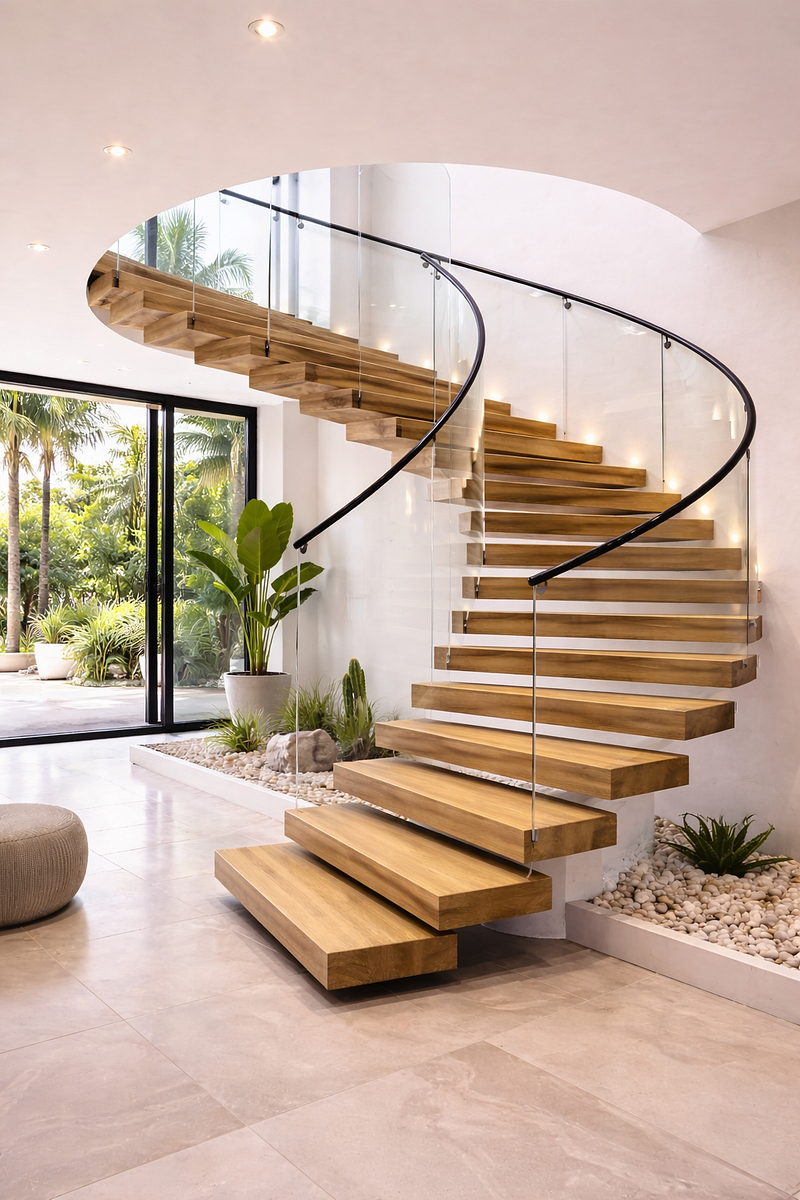
5. Curved Staircase
A curved staircase follows a smooth, flowing arc and is widely used in luxury villas, premium residences, five-star hotels, commercial lobbies, and high-end institutional buildings. Unlike standard staircases, curved stair designs are not just circulation elements — they are architectural centrepieces that define space, movement, and visual identity. In modern residential and commercial architecture, a well-designed curved staircase adds a sense of grandeur, openness, and sophistication.
Architectural Challenges
From a construction and structural standpoint, curved staircases require a high level of architectural expertise:
- Complex RCC design and load distribution
- High-precision shuttering and formwork execution
- Skilled workmanship for accurate curvature and finish quality
- Careful coordination between structure, finishes, and interior design
Without proper architectural control, curved staircases can lead to over-design, excessive material consumption, and execution errors.
ArchitectsHive Expertise
At ArchitectsHive, curved staircases are engineered and detailed with both visual excellence and cost efficiency in mind:
- Designed using advanced 3D modelling and detailed working drawings for perfect curvature and proportions
- Structurally optimised to avoid over-reinforcement and unnecessary RCC cost
- Seamlessly integrated with luxury interior finishes, lighting design, and railing systems
- Strategically positioned as architectural focal points without disturbing circulation or usable space
This design-led approach allows us to deliver iconic curved staircases that enhance luxury interiors while maintaining controlled construction cost, structural safety, and long-term durability.
6. Floating Staircase
A floating staircase, also known as a cantilever staircase, creates a striking modern visual where each step appears suspended in air without visible support. This staircase type is widely used in luxury homes, modern villas, duplex residences, designer apartments, and premium commercial interiors. In contemporary architecture and interior design, floating staircases represent clean lines, openness, and minimalism, making them a preferred choice for modern living spaces.
Architectural Requirements
Despite their light appearance, floating staircases demand high-level architectural and structural precision:
- Strong concealed structural backing such as RCC walls, steel beams, or cantilever supports
- Precise detailing and execution accuracy to avoid deflection or vibration
- Careful safety coordination, especially for tread width, rise, and edge protection
- Seamless coordination between architecture, structure, and interior finishes
Without expert architectural planning, floating staircases can become unsafe or structurally inefficient.
The ArchitectsHive Method
At ArchitectsHive, floating staircases are designed with a balance of engineering strength and design elegance:
- We ensure structural safety through concealed beams, reinforced RCC walls, or steel frameworks
- Anti-slip finishes, correct tread dimensions, and well-designed handrails are integrated for safety and comfort
- Staircases are carefully aligned with modern interior design themes, lighting, and spatial flow
- All designs comply with building safety standards, comfort norms, and long-term durability requirements
The result is a modern floating staircase that delivers visual lightness, structural reliability, construction efficiency, and lasting performance — without compromising safety or usability.
7. Cantilever Staircase
A cantilever staircase is an advanced form of modern staircase design where individual steps extend outward from a structural wall without visible supports beneath. Highly popular in luxury villas, high-end residences, designer duplex homes, and premium commercial interiors, cantilever staircases are admired for their clean, floating appearance and minimalist architectural expression. In contemporary architecture, they are often used as statement elements that reflect innovation, precision, and refined interior design.
Architectural Complexity
Despite their visually light form, cantilever staircases are among the most structurally demanding staircase types:
- Require accurate structural engineering and load calculations
- Demand extreme execution precision to prevent deflection, vibration, or cracking
- Need strong coordination between RCC structure, steel reinforcement, and finishing layers
- Poor detailing can lead to long-term safety risks and costly repairs
This makes professional architectural involvement essential from the earliest design stage.
The ArchitectsHive Difference
At ArchitectsHive, cantilever staircases are designed with a safety-first, performance-driven approach:
- We design cantilever staircases only after detailed structural feasibility checks
- RCC walls, embedded steel plates, and reinforcement detailing are carefully coordinated
- Special attention is given to vibration control, load transfer, and long-term stability
- Aesthetic intent is balanced with construction practicality and maintenance considerations
This ensures that the staircase delivers luxury visual impact without compromising structural safety, avoiding failures, excessive construction cost, and future maintenance issues.
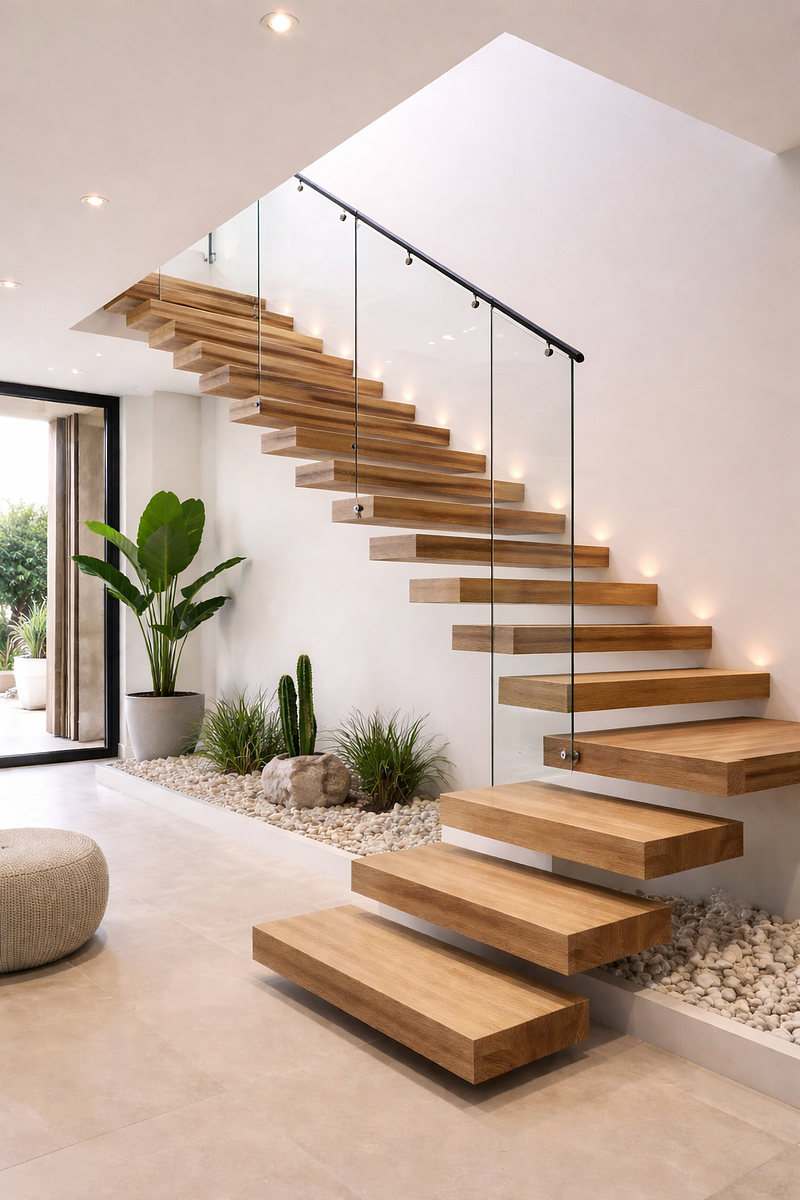
Why ArchitectsHive Makes a Difference in Staircase Design
At ArchitectsHive, staircase design is never treated as an afterthought. It is planned as a core architectural element that influences circulation, structural efficiency, construction cost, interior design flow, and long-term usability. From the earliest concept stage, staircases are integrated into the architectural layout — not added later as a compromise.
Our Key Strengths in Staircase Design
- Early staircase planning during architectural layout design to avoid space wastage and rework
- Strong structural coordination that reduces unnecessary RCC and steel consumption, lowering construction cost
- Safety-compliant riser, tread, and headroom design as per building codes and user comfort standards
- Seamless integration with interior design, finishes, and architectural lighting for a cohesive visual experience
- Climate-responsive staircase placement to improve natural ventilation, daylight access, and thermal comfort
- Focus on long-term usability and future adaptability, ensuring staircases remain functional as needs evolve
Whether you are searching for an architect near me, planning a residential staircase, or designing a commercial or institutional building, ArchitectsHive delivers staircase solutions that combine architectural clarity, construction efficiency, safety, and design value — creating staircases that perform well, look refined, and stand the test of time.
Conclusion: A Staircase Needs an Architect, Not Just a Contractor
A staircase may physically connect floors, but a well-designed staircase connects architecture, structure, interior design, and everyday lifestyle. When staircase planning is overlooked or treated as a secondary element, it often leads to higher construction cost, wasted floor area, poor circulation, and limited future adaptability.
A professional architectural staircase design ensures that every step is:
- Technically sound and structurally efficient
- Cost-optimised, reducing unnecessary RCC and steel usage
- Safe, comfortable, and code-compliant
- Visually integrated with the overall architecture and interior design theme
At ArchitectsHive, staircases are designed to perform — not just impress. Whether for compact residential homes, luxury villas, duplex houses, or commercial buildings, our staircase designs are driven by architectural intelligence, construction efficiency, safety standards, and long-term durability. If you are planning a new project and searching for a reliable architect near you, ArchitectsHive offers intelligent staircase design and complete architectural solutions that add lasting value to your building — today and for decades to come.
we deliver end-to-end architectural solutions — from architecture in Delhi NCR and expert interior design services in Delhi NCR to reliable construction and execution in Delhi NCR — ensuring every project is thoughtfully planned, beautifully designed, and efficiently built under one professional roof.
#BestArchitectureInDelhiNCR #BestArchitecturecompanyinNoida #BestArchitectureIngurugram #BestArchitectureInfaridabad #ResidentialArchitectureInDelhiNCR #ResidentialArchitectureinNoida #ResidentialArchitectureingurugram #ResidentialArchitectureinfaridabad #ResidentialArchitectureindelhi #ArchitectureInDelhiNCR #ArchitectureFirmInDelhiNCR #ArchitectureFirmInNoida #ArchitectureFirmIngurugram #ArchitectureFirmInFaridabad #ArchitectureFirmindelhi #ElevatingExcellenceInArchitecture #ArchitectsHive #Architect #Architectinnoida #Architectingurugram #expertArchitectsinfaridabad #bestArchitectsindelhi #modernArchitectureDesign #Architecture #top10ArchitecturecompanyinNoida #Architectureinfaridabad #bestArchitecturaldesignsingurugram #ArchitectureFirm #frontelevation #exteriordesign #Construction #ConstructionfirminNoida #Constructioncompanyinfaridabad #Constructioningurugram #BuildingConstruction #Interior #modernInteriorDesign #InteriorDesigner #InteriorDesignerinNoida #InteriorDesignerindelhiNCR #InteriorDesignerinfaridabad #modularkitchendesigns #Bedroominterior #livingroominterior #InteriorDecorator #HomeDecor #HomeRenovation #luxurylifestyle #Homeinterior #EastDelhi #WestDelhi #NorthDelhi #SouthDelhi #Delhi #DelhiNCR
Comments
Post a Comment